
Article
George Michael's gear: the instruments behind their career
George Michael was a pre-eminent British singer and producer whose career was defined by his powerful, soulful vocals and a meticulous approach to electronic production. Utilizing a blend of high-end digital reverberation and classic 1980s synthesisers, he crafted a sophisticated pop sound that bridged the gap between R&B, funk, and dance-pop.
The Rise of a Pop Icon
George Michael first achieved international fame in the 1980s as one half of Wham! before establishing himself as a solo powerhouse. During this era, his sound was heavily influenced by the digital revolution in music technology. The Yamaha DX7 was a staple of the 1980s pop landscape, providing the crisp FM synthesis heard across many of the decade's hits. To ground his arrangements in rhythm, he utilised the Linn Electronics LinnDrum, a machine famed for its realistic drum samples that helped define the groove of post-disco and R&B.
The Faith Era and Studio Craft
With the release of *Faith* in 1987, Michael solidified his status as a master songwriter and producer. His sophisticated arrangements often relied on the warm, analogue tones of the Roland Juno-106, a synthesiser known for its lush pads and bass sounds. In the studio, he employed the Roland S-50 sampler and the Roland Octapad Pad-8 to add percussive layers to his soulful compositions. For bass duties, the Status Graphite Matrix provided a modern, clean tone that complemented his genre-bending approach to funk and rock.
Vocal Precision and Performance
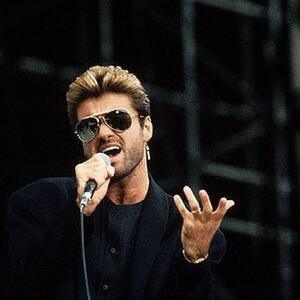
While Michael was a multi-faceted musician, his primary instrument was his voice. To capture his evocative lyrical storytelling on stage during his later career, he relied on the Sennheiser SKM 5200 wireless microphone system. To ensure his soulful delivery remained pitch-perfect amidst complex live arrangements, he utilized the Sennheiser EW 300 IEM G2 in-ear monitoring system. This gear allowed him to maintain his reputation as one of the most versatile vocalists in pop history until his activity ceased in 2016.
Signature Production and Effects
Michael’s production was characterized by a sense of space and polished depth. He achieved this through the extensive use of high-end digital outboard gear, including the AMS RMX16 Digital Reverberation System, which provided the signature 'non-linear' reverb sounds of the 1980s and 90s. He also made frequent use of Lexicon units, specifically the Lexicon 224X / 224XL Digital Reverberator and the Lexicon PCM 80, to create the smooth, atmospheric textures found in his jazz and blues-influenced tracks. In the studio, these sounds were often monitored through Dynaudio M1 monitors and controlled via a Mackie 32-8 Bus Analog Mixer.
Evolution of Synthesis
As Michael's music moved into the 1990s and 2000s, incorporating more electronic and sophisticated pop elements, he integrated the Kurzweil K2000. This workstation allowed for deep sound design, assisting in the transition toward the more complex, layered arrangements found in his later solo work. This technological palette supported his ability to remain relevant across multiple decades, from the heights of the 1980s to his final years of activity.
Artists who have used this item
Frequently asked questions
- What microphone did George Michael use for live performances?
- George Michael used the Sennheiser SKM 5200 wireless microphone.
- Which synthesiser did George Michael use for 1980s pop sounds?
- He used the Yamaha DX7 and the Roland Juno-106.
- What drum machine is associated with George Michael's production?
- The Linn Electronics LinnDrum was used in his rhythmic arrangements.
- How did George Michael monitor his sound on stage?
- He used the Sennheiser EW 300 IEM G2 in-ear monitoring system.
- What digital reverb units contributed to his studio sound?
- He used the AMS RMX16 Digital Reverberation System, the Lexicon 224X / 224XL, and the Lexicon PCM 80.
- Did George Michael use any sampling technology?
- Yes, he used the Roland S-50 sampler in his studio work.
- Which mixer did George Michael use in his studio setup?
- He used a Mackie 32-8 Bus Analog Mixer.
- What type of bass guitar was part of his gear list?
- The Status Graphite Matrix was his chosen bass instrument.
- Which studio monitors did George Michael use?
- He used Dynaudio M1 monitors for studio listening.
- Did George Michael use any percussion pads?
- Yes, he used the Roland Octapad Pad-8.
- What workstation synthesiser did he use in his later career?
- He used the Kurzweil K2000.
- What was George Michael's primary instrument?
- His primary instrument was his voice.
Last updated: